

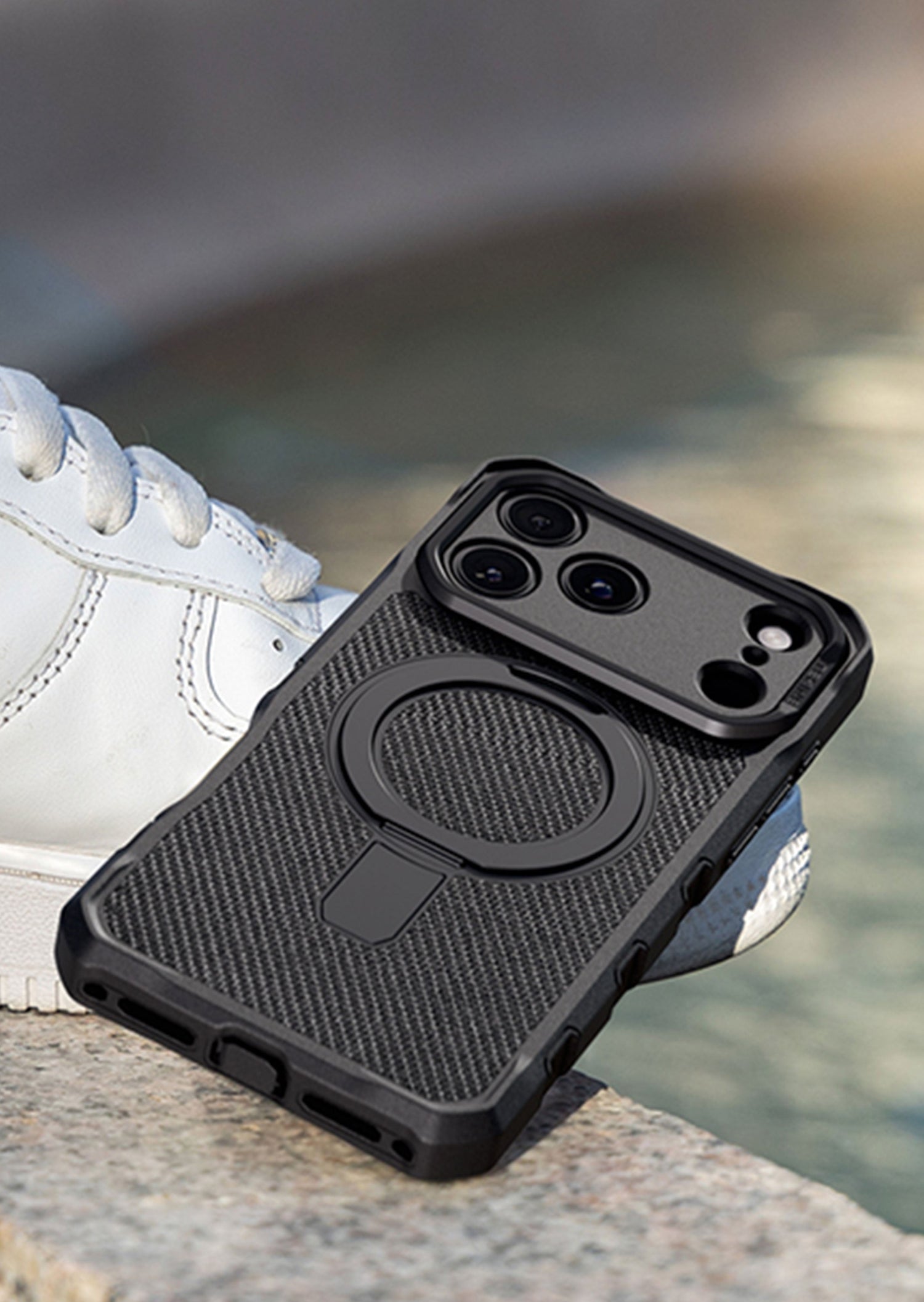
Walk through any phone case listing and you'll see the phrase "military-grade" attached to half the products on the page. It sounds impressive, but it's also one of the most overused and least explained terms in phone accessories. So what does military-grade phone case protection actually mean, and how do you tell a case that genuinely earns the label from one that's just borrowing it for marketing?
Where "Military-Grade" Comes From
The term traces back to MIL-STD-810G, a U.S. military testing standard originally developed to determine whether equipment can survive rough handling in the field. It covers a wide range of environmental stress tests, including vibration, temperature extremes, humidity, and drops.
For phone cases, the part that matters most is the drop-test procedure: dropping a device from a specified height, typically 1.2 meters (about 4 feet), onto plywood over concrete, across multiple orientations (corners, edges, and flat sides), and confirming the device still functions afterward.
Here's the important caveat: MIL-STD-810G is not a certification you apply for and get verified by a third party the way, say, an IP water-resistance rating works. It's a testing methodology. Any manufacturer can say their case is "tested to military standards" without submitting to independent verification. That's exactly why the phrase gets slapped on so many products, even if they weren't rigorously tested at all.
What Actually Separates a Real Military-Grade Case From a Marketing Claim
Since there's no independent body policing the term, the way to evaluate a "military-grade" case is to look past the label and check for specifics:
A stated drop height, not just the phrase. A case that lists an actual tested drop height (for example, "protects against drops up to 3m/10ft") is giving you something you can evaluate. A case that only says "military-grade" with no number attached is giving you nothing to verify.
Reinforced corners and edges. Drops rarely land flat. Most real-world drops hit a corner first, which concentrates the impact into a small area. A case engineered for drop protection has visibly reinforced corners, often a different material or thicker padding than the rest of the case.
Internal shock absorption, not just a thick shell. Bulk alone doesn't equal protection. What matters is whether the case has a structured way to absorb and redirect impact energy away from the phone, rather than just adding a thicker layer of the same material.
Raised edges around the screen and camera. If the case doesn't sit slightly higher than the screen and camera lens, a face-down or camera-down drop will hit the glass directly, regardless of what the back of the case can survive.

How ITSKINS Approaches Drop Protection
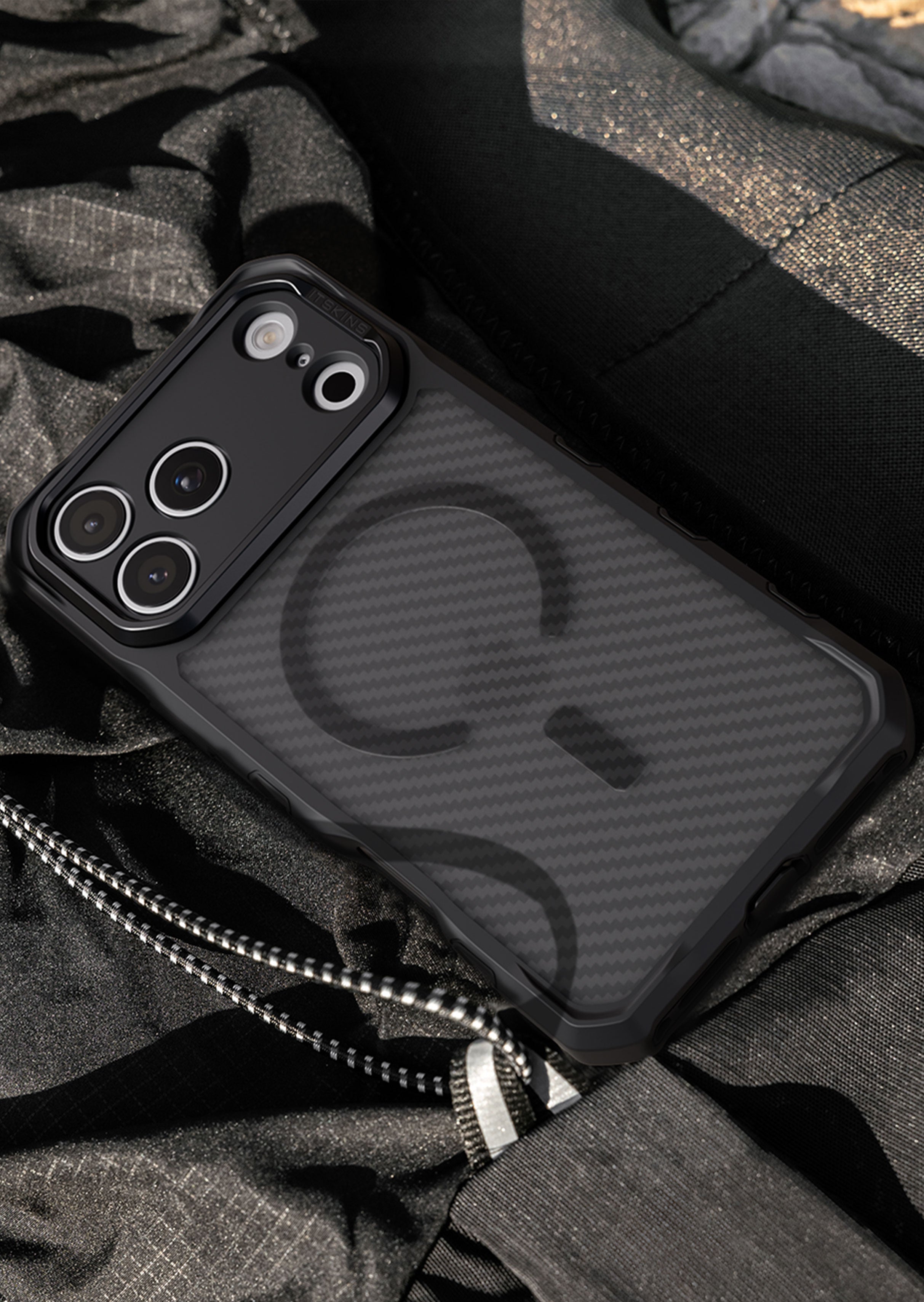
Rather than relying on the phrase alone, ITSKINS builds drop protection around HEXOTEK, a dual-layer air pocket system integrated into the interior perimeter of the case that's designed to disperse and redirect impact energy away from the device on a drop. The SUPREME series is tested to protect against drops up to 3 meters (10 feet), with reinforced corners and raised edges around the screen and camera built in as standard, not an upgrade.
For anyone who wants a side-by-side look at how the different protection levels compare, including drop height ratings across the full case lineup, the range breakdown walks through each series and what it's built to handle.
Frequently Asked Questions
Is "military-grade" phone case protection a real certification? No. It refers to MIL-STD-810G, a U.S. military testing methodology, not a certification issued by an independent body. Manufacturers self-report whether their products meet the standard, so the term alone doesn't guarantee rigorous testing.
What drop height counts as military-grade? There's no single official number, but MIL-STD-810G drop testing is commonly referenced around a 1.2-meter (4 foot) drop across multiple orientations. Many rugged cases, including ITSKINS' BALLISTIC_R series, are built and tested well beyond that baseline.
Does a thicker case mean better drop protection? Not necessarily. Thickness alone doesn't determine protection. Reinforced corners, raised edges around the screen and camera, and a structured internal shock-absorption system matter more than raw bulk.
Do military-grade cases protect the screen too? A drop-protective case shell primarily protects the back and sides. For full screen protection, pair your case with a dedicated tempered glass screen protector, since even raised case edges only reduce, not eliminate, direct screen impact risk.
Choose Protection You Can Verify
The next time you see "military-grade" on a case listing, look for the specifics behind it: a stated drop height, reinforced corners, and a real shock-absorption structure. Explore ITSKINS' drop-protection cases to see the tested specs behind the claim rather than taking the label at face value.

Laisser un commentaire
Ce site est protégé par hCaptcha, et la Politique de confidentialité et les Conditions de service de hCaptcha s’appliquent.